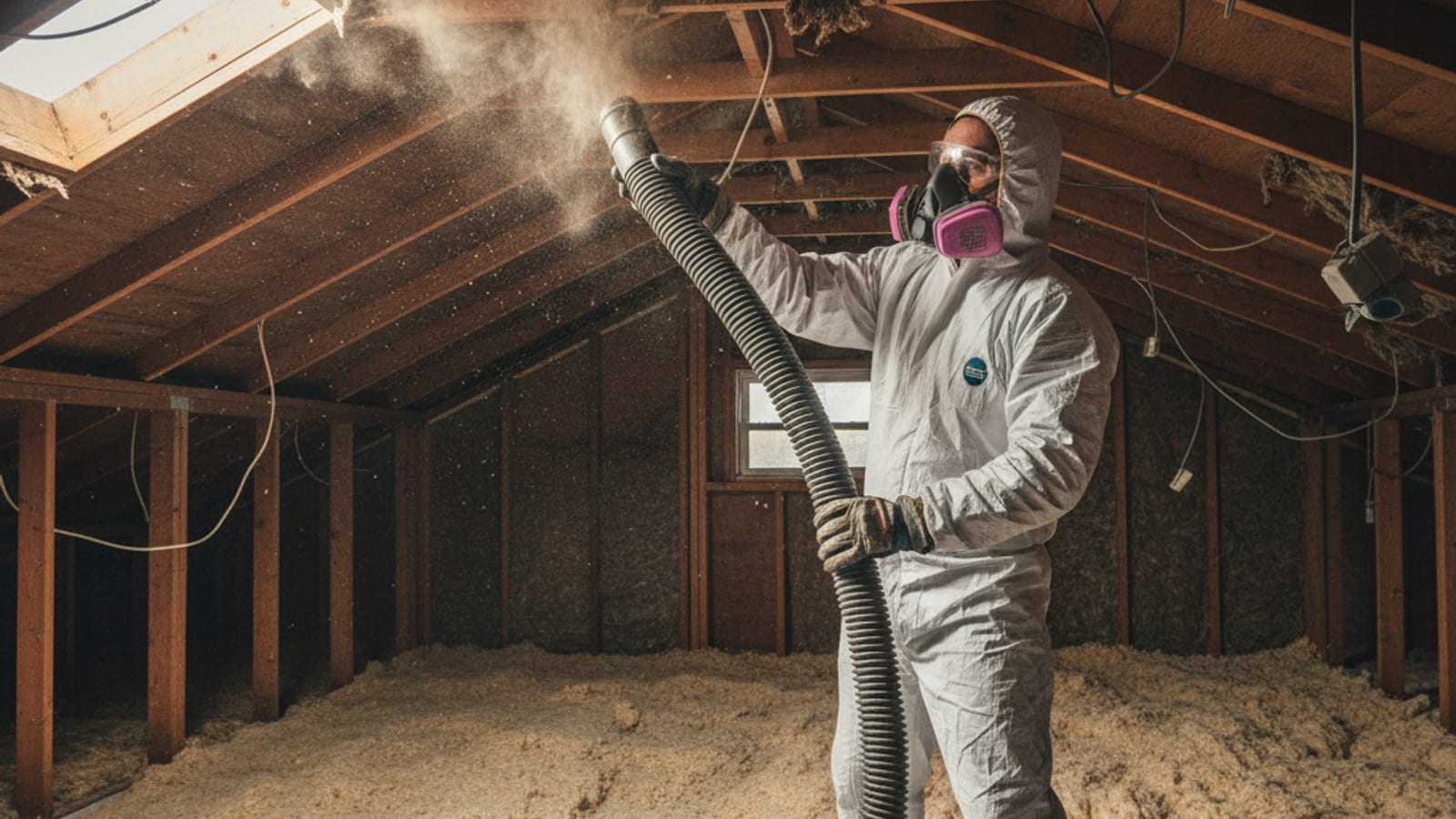
Old insulation isn’t automatically bad insulation. We get calls every week from homeowners who’ve been told they need to “rip it all out and start over” — and most of the time, that’s not true. Topping up healthy old insulation is faster and cheaper than removing it.
But sometimes removal is non-negotiable. Here’s how to tell which case you’re in.
When removal is necessary
Rodent contamination. Mice, rats, and squirrels do two things to attic insulation: they nest in it (compressing R-value to nothing) and they urinate and defecate in it (creating biohazard). Once contamination is widespread, the safe move is full removal, sanitization, and reinsulation. Spot-cleaning rarely works because the urine soaks into the surrounding material.
Water damage. A roof leak, plumbing leak, or HVAC condensate spill that has soaked the insulation needs removal. Wet cellulose loses R-value, grows mold, and stays wet long after the leak is fixed. Wet fiberglass is less prone to mold but still loses performance.
Smoke damage. Kitchen fires, attic fires, or wildfire smoke that has reached the attic leaves residue on every fiber. The smell doesn’t leave on its own. Insurance usually covers this.
Vermiculite (pre-1990). Vermiculite is a gray, pebble-like loose-fill insulation. Most vermiculite installed before 1990 came from a Montana mine that was contaminated with asbestos. It’s not always asbestos-positive, but it’s never safe to disturb without testing. We don’t remove vermiculite — that’s a state-licensed asbestos abatement scope. We identify it on the first visit and refer you to a licensed abatement contractor.
Major attic remodel. If you’re framing in new HVAC ducts, electrical, or storage platforms, working over existing insulation is a mess. Removing it first is cleaner and cheaper than working around it.
When topping up is fine
Old but clean. A 1970s home with original R-11 fiberglass batts that look dirty but show no rodent or water damage can be topped up. Just blow cellulose or fiberglass on top to get to R-49. The old material continues to perform its rated R-value; the new material adds R on top.
Settled but intact. Loose-fill insulation settles 10–15 percent over 20–30 years. Settled cellulose at R-15 is still doing R-15 of work. Top it up to bring back the original depth plus the new target.
Rodent activity but limited and localized. If we find evidence of past rodent activity but no widespread contamination — a few droppings, an old nest in one corner — we can spot-remove and bag the affected area, then top up the rest. We make this call on inspection.
How we decide
Every removal-or-topup decision starts with an attic inspection. We look for:
- Visible rodent activity: droppings, nests, chewed paper backing, or grease tracks.
- Moisture staining: water marks on rafters, deck plywood, or insulation surface.
- Settling: how deep is the existing insulation? How does that compare to original install depth?
- Dust and dirt accumulation: indicates how long it’s been since any work was done.
- Smell: musty (moisture), urine (rodents), or smoke (fire) all signal removal.
- Material identification: vermiculite, cellulose, fiberglass batt, fiberglass loose-fill, or rock wool. Some are easier to top up than others.
We photo-document everything we find and walk you through it before we quote.
What removal costs
Vacuum-extraction removal of damaged insulation runs $1.50 to $3 per square foot for typical residential attics. A 1,500 sq ft attic with rodent contamination runs $2,500 to $4,500 for the removal alone — separate from the new insulation that goes in afterward.
What’s included:
- PPE for the crew (respirators, suits, gloves)
- Site protection (floors, stairs, attic access)
- Truck-mounted vacuum extraction
- Sanitization of attic surfaces post-removal
- Disposal as bio-hazard or general waste depending on contamination
- Photo report of conditions
What’s not included:
- Pest control for active infestation (we refer; sealing entry points is essential before reinsulating)
- Asbestos abatement (referred to licensed abatement contractor)
- Structural repairs (rotted decking, damaged framing)
What we don’t do
We don’t remove asbestos-containing material — including vermiculite that tests positive. That’s a state-licensed scope and we won’t pretend otherwise.
We don’t remove old insulation just to upsell new insulation. If the existing material is healthy, we say so and quote the top-up.
We don’t promise to “remove the smell” of rodent contamination without first removing the contaminated material. Sanitization works on hard surfaces, not on saturated fiberglass.
What to look for in a quote
A good removal quote shows you what we’re removing, why, and how we’re documenting it. It includes sanitization. It separates removal from new insulation pricing so you can see what each piece costs.
If a contractor is pushing removal hard without giving you photos of the conditions, get a second opinion. We’ve seen plenty of “remove and replace” quotes for healthy insulation that just needed a top-up.
When removal is the right call, we’ll show you why. When it isn’t, we’ll save you the money.