Last updated: May 2, 2026
Blown-In in Imperial Beach, CA.
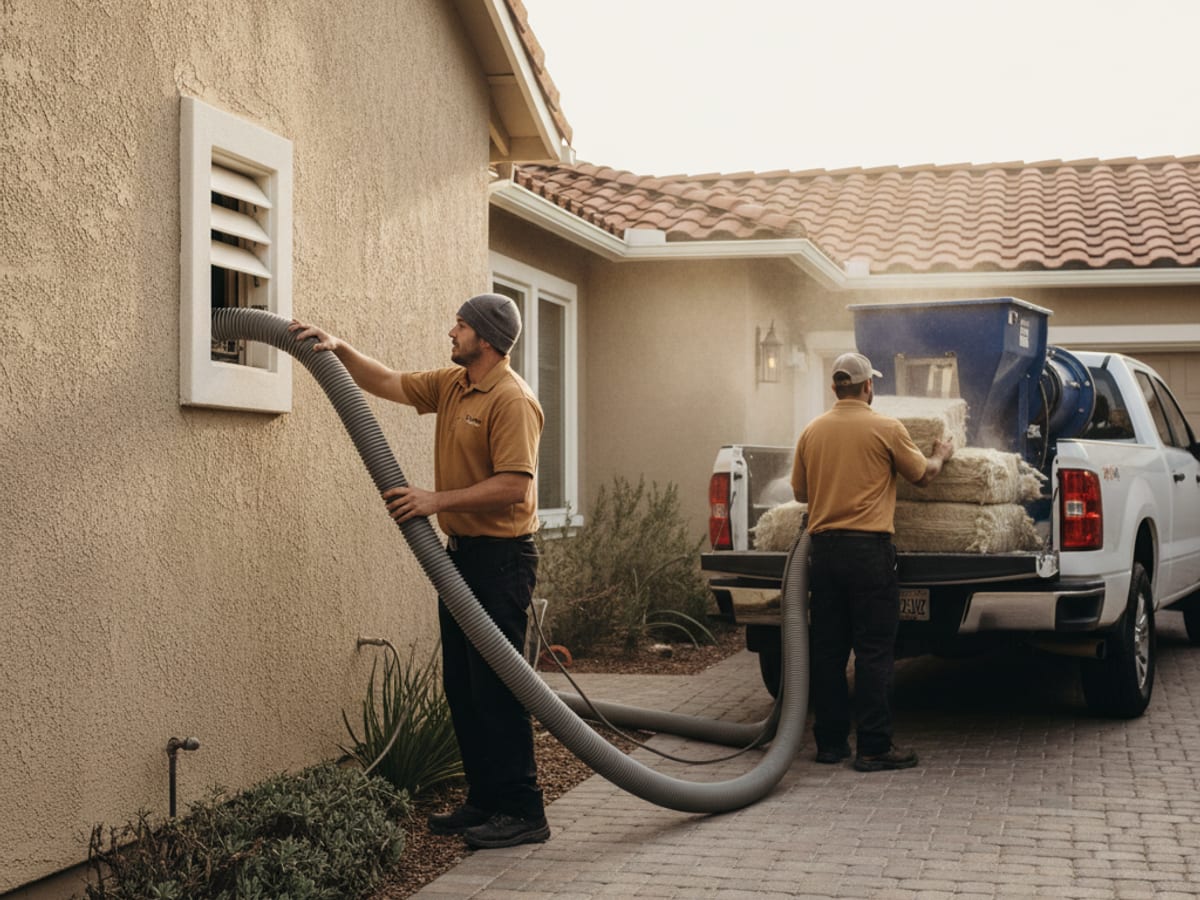
Blown-In for Imperial Beach homes, done by licensed San Diego County technicians. Blown-in is the workhorse for retrofits. Cellulose or fiberglass loose-fill goes into attics fast and cheap.
Why is blown-in different in Coastal San Diego?
Coastal blown-in is mostly attic top-ups in Coronado and Imperial Beach housing stock from 1970–1995. Cellulose handles the marine climate well; we keep humidity and ventilation in mind on every quote.
What's included in blown-in in Imperial Beach?
- Cellulose or fiberglass loose-fill for attics
- Dense-pack cellulose for closed wall cavities (drill-and-fill)
- Truck-mounted blowers for proper density and reach
- Pre-blow air sealing of penetrations
- Baffle installation at eaves to protect soffit vents
- Depth markers on rafters for inspection verification
- Cleanup and HEPA vacuum of the work area
When does a Imperial Beach home need blown-in?
- Existing attic is under R-19 and you want to top up
- You bought an older home with no wall insulation
- You hear a clear difference between rooms on opposite sides of the house
- You are doing a stucco redo and can pull a few cores for dense-pack
- You want a budget alternative to spray foam
What do Imperial Beach homeowners ask about blown-in?
How fast can you get to Imperial Beach for blown-in?
Same-day service in Imperial Beach on most weekdays. Morning slots book fastest during heat waves — call before 10 a.m. for best-same-day availability. After-hours emergency calls are answered by an on-call technician, not a dispatcher.
What does blown-in cost in Imperial Beach?
$1.20–$2.60 per sq ft installed for attics; $3–$5 per sq ft of wall for dense-pack. Pricing is the same across San Diego County — no mileage upcharge for Imperial Beach. Our $89 diagnostic is credited toward the repair if you move forward.
How does Imperial Beach's climate affect this service?
Coastal homes in Imperial Beach run cooler than inland but still benefit from a top-up to R-38 and aggressive air-sealing. Marine humidity migrates through any open chase, so we hunt those leaks first before insulation goes in.. Coastal blown-in is mostly attic top-ups in Coronado and Imperial Beach housing stock from 1970–1995.
Cellulose or fiberglass — which is better?
Cellulose has higher R per inch, better air-flow resistance, and is recycled paper treated for fire and pests. Fiberglass is non-organic, lighter, and easier in damp climates. In dry, mild San Diego we use cellulose more often unless the attic has past moisture issues.
What is dense-pack?
Dense-pack is cellulose installed at 3.5 lb/cu ft into closed wall cavities through small drilled holes. The high density resists settling, plugs air leaks, and adds R-13 to R-15 to a wall that previously had nothing. We patch and texture before paint.
Need blown-in in Imperial Beach?
Call for a free quote. Same-day service on most repairs, next-day on most installs.