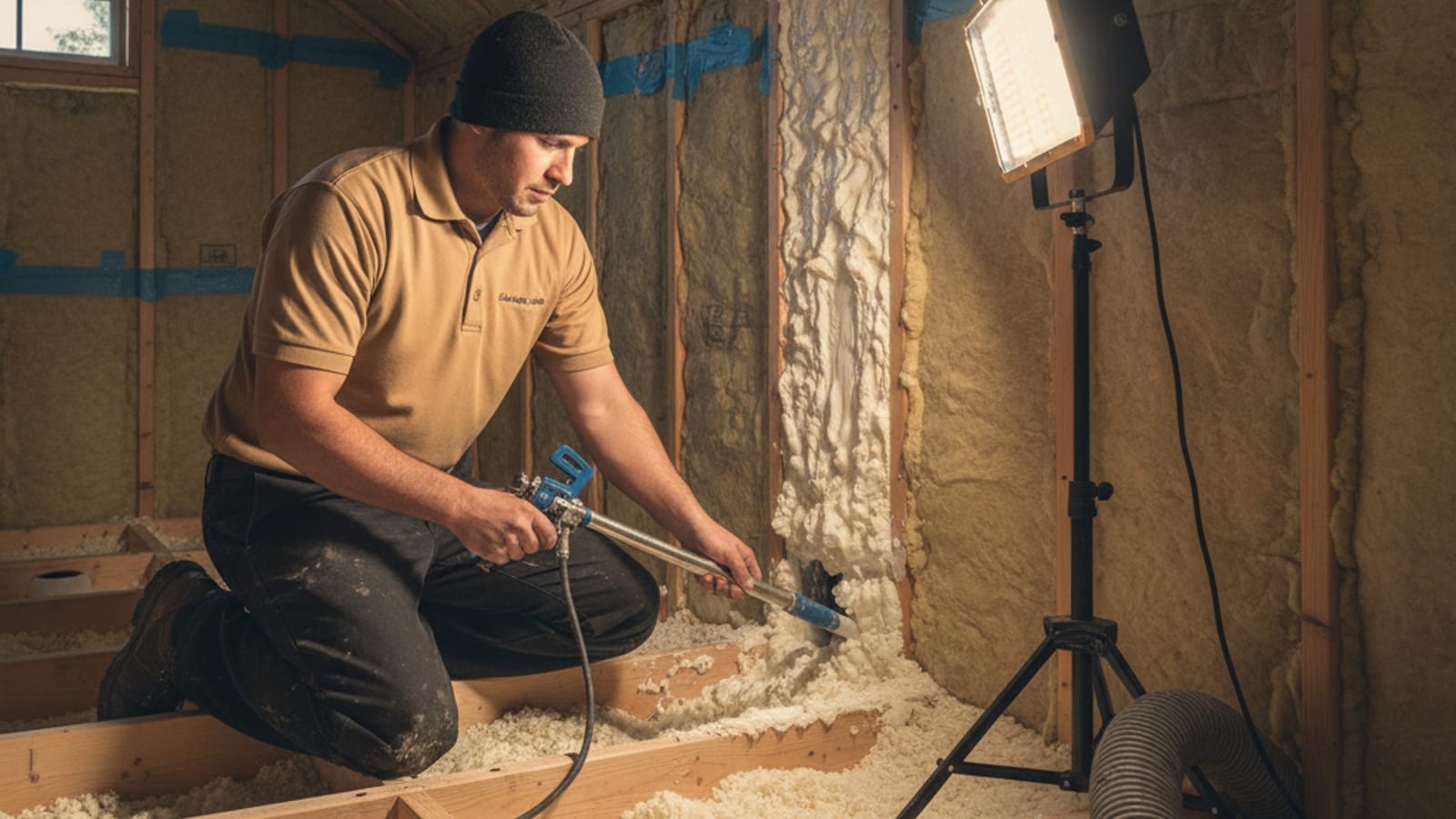
Insulation slows the movement of heat through a material. It does nothing to stop air from moving through a hole. That’s the simple physics behind a rule we follow on every retrofit: air-sealing comes first, insulation comes second.
The leaky-sweater analogy
Imagine putting on a thick sweater on a cold morning, then leaving the front zipped open. The sweater’s insulation rating doesn’t change. Your body heat still walks out through the gap. The sweater is doing its job; the assembly isn’t.
That’s what an unsealed attic with new R-49 insulation looks like. The cellulose is rated to slow heat. The unsealed top plates, recessed lights, plumbing chases, and attic hatch are all open zippers.
We’ve measured 30–50 percent of total heat loss in older San Diego homes coming through air leaks rather than through the insulation. You can double the R-value of an attic and still see disappointing results if you don’t seal first.
The high-leverage spots
Most San Diego homes leak air in roughly the same places. We hit these on every air-sealing scope:
Top plates. The horizontal lumber where exterior walls meet the attic. There’s almost always a gap between the plate and the drywall, and that gap connects the warm conditioned space directly to the attic. We foam each plate from the attic side.
Recessed (can) lights. Older recessed lights are not airtight. Air migrates around the housing into the attic. We replace them with IC-rated airtight cans, or seal them with airtight covers from above.
Attic hatch. Most attic hatches are unfinished plywood sitting on bare drywall. No gasket. We add a foam gasket and weatherstripping; if the hatch itself is uninsulated, we add a rigid foam panel to the back.
Plumbing chases. Vertical chases that run from a basement or crawl up to the attic carry plumbing — and air. We foam every penetration where pipes pass through framing.
HVAC chases. Wherever ducts pass through the ceiling or walls, there’s a gap. Same fix: foam the gap.
Around windows and doors. Exterior windows and doors leak around the frame. Backer rod and caulk, or expanding foam where the gap is large.
Rim joists. In homes with crawlspaces, the rim joist (where the floor framing meets the foundation) is one of the biggest air leaks in the house. Closed-cell spray foam handles it in one application.
What we do
A typical air-sealing scope on a 1,800 sq ft San Diego home runs $400 to $1,200 and looks like:
- Visual inspection of the attic and crawlspace, sometimes with a thermal camera on a cool morning.
- Foam top plates, can lights, plumbing and HVAC chases.
- Replace or cover recessed lights with airtight versions.
- Gasket and weatherstrip the attic hatch.
- Caulk or foam around exterior penetrations (vents, dryer outlets, gas lines).
- Photo-document the work for your records.
We don’t always do a blower-door test on retrofits. Most leaks are visually obvious, and the cost of the test sometimes outweighs the benefit. On Title 24 alteration projects and whole-home performance contracts, we do test — that’s where the data matters.
What it changes
Three things you should expect from a proper air-seal pass:
The house feels less drafty. Even when nothing is open, air moves through unsealed homes. Sealing it makes the air feel still.
Insulation actually performs. New insulation over a sealed envelope hits or exceeds its rated R-value. The same insulation over an unsealed envelope underperforms by 30–50 percent.
HVAC runs less. Less air leakage means less conditioned air escaping. Less conditioned air escaping means less makeup air to heat or cool. Less makeup air means lower bills.
What it doesn’t do
Air-sealing is not the whole answer. It works with insulation, not instead of it. A perfectly sealed but uninsulated attic still loses heat through conduction through the drywall ceiling. You need both.
It also doesn’t replace mechanical ventilation. A modern, tightly sealed home needs intentional fresh air — usually a bath fan on a timer or an ERV. Older leaky homes had passive infiltration that did this job (badly). Sealed homes need it managed.
When to seal
Always before insulating. Sealing existing insulation in place is harder, messier, and less effective than sealing on bare framing.
If you’re getting attic insulation quoted and the contractor doesn’t include air-sealing, ask why. The honest answer is they’re cutting corners. The right answer is they include it as part of the scope.
That’s how we do it on every job — because it’s the difference between an upgrade that works and an upgrade that disappoints.