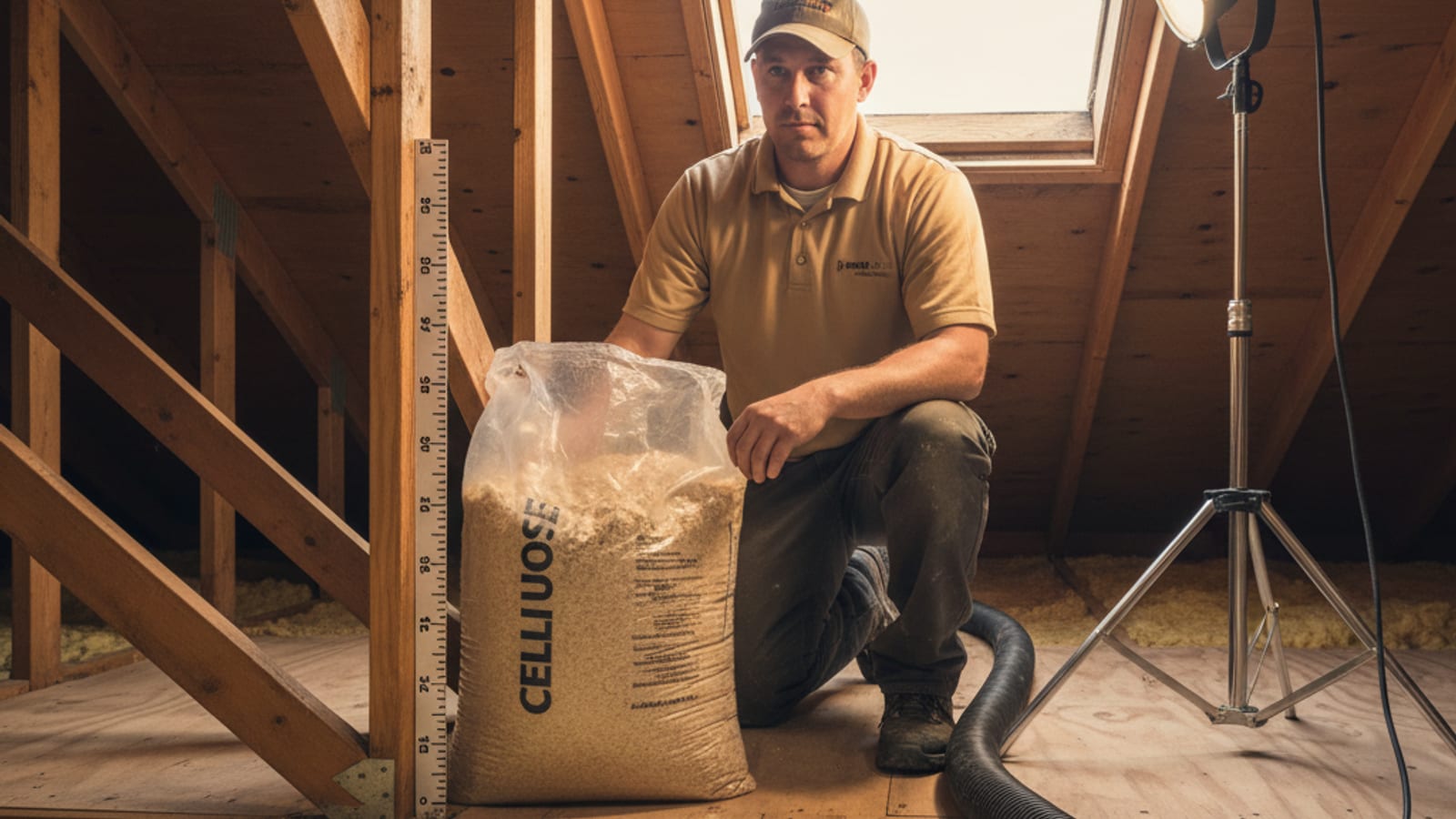
Attic insulation in San Diego County in 2026 runs $1.40 to $2.80 per square foot installed, with most jobs landing between $2,500 and $4,500 for a typical 1,500–2,000 sq ft home. That’s the short answer. The longer answer depends on your existing R-value, the access conditions in your attic, and which inland or coastal zone you live in.
What drives the price
Three things move the number more than anything else:
Target R-value. California Title 24 sets R-30 minimum on a roof alteration and R-38 on most full reinsulations. We usually recommend R-49 — the marginal cost from R-38 to R-49 is small (about 20 percent more material) and the comfort difference is real. R-60 is overkill for most San Diego homes outside the backcountry.
Existing condition. A clean attic with even old R-19 batts can be topped up with blown-in cellulose or fiberglass. A rodent-fouled, water-damaged, or vermiculite-suspected attic has to be removed first — that’s another $1.50 to $3 per square foot before any new insulation goes in.
Access. A 2,000 sq ft attic with a centered, walkable access hatch is straightforward. Cathedral ceilings, low-pitch roofs, ducts blocking the way, or split attics with multiple access points all add labor.
Cost by R-value (1,500 sq ft attic, top-up only)
- R-19 to R-30: $1,800 to $2,800
- R-19 to R-38: $2,200 to $3,400
- R-19 to R-49: $2,500 to $4,500
- R-19 to R-60: $3,200 to $5,500
These assume you already have at least R-11 or R-13 in place and we’re blowing on top with cellulose or fiberglass. Empty attics start about 15–20 percent higher because we’re laying baffles and starting from scratch.
Cost by method (same 1,500 sq ft attic)
- Blown-in cellulose to R-49: $2,500 to $4,200. The standard scope. Cellulose has higher R per inch than fiberglass and resists air movement better.
- Blown-in fiberglass to R-49: $2,300 to $4,000. Slightly cheaper, lighter, non-organic. We use it where past moisture has been an issue.
- Open-cell spray foam at the roof deck: $5,500 to $9,500. Higher cost but does insulation and air-seal in one step. Best for unvented cathedral roofs and conditioned attic conversions.
- Closed-cell spray foam at the roof deck: $7,500 to $13,000. Highest R per inch, vapor retarder, structural. Only worth the premium for specific assemblies.
Cost by zone
These are the same scope (R-19 to R-49 cellulose with air-sealing on a typical 1,800 sq ft home), priced by zone:
- Coastal (Coronado, Del Mar, Imperial Beach): $2,800–$4,500. Marine layer access can be tougher; salt-air-rated baffles cost slightly more.
- Central (San Diego, La Mesa, Lemon Grove): $2,600–$4,200. Standard pricing, large housing stock.
- North County Inland (Escondido, San Marcos, Vista): $2,500–$4,000. Volume zone, competitive pricing.
- East County (El Cajon, Santee, Lakeside): $2,400–$3,900. Highest demand zone, biggest comfort gain per dollar.
- South County (Chula Vista, National City): $2,500–$4,100. Mixed coastal/inland pricing.
- Backcountry (Julian, Pine Valley): $3,000–$5,200. Travel time and remote logistics raise the floor.
What’s included in the price
When we quote a flat-rate attic job, the number includes:
- Existing-insulation inspection and depth measurement
- Air-sealing of top plates, can lights, plumbing chases, and the attic hatch
- Baffle installation at eaves
- Blown-in cellulose or fiberglass to marked depth
- Depth markers on rafters for inspection verification
- HEPA cleanup of the work area
- Title 24 documentation and R-value verification
What’s not included: insulation removal (separate line item), specialty work like radiant barrier or spray foam, and structural deck repairs from past leaks.
Rebates that lower the out-of-pocket
A few federal and California programs apply to most San Diego attic upgrades:
- Federal 25C tax credit: 30 percent of insulation costs, up to $1,200/year.
- HERO and PACE financing: for qualifying homes, lets you finance the upgrade through your property tax bill.
- Local utility rebates: SDG&E periodically offers insulation rebates tied to whole-home energy programs.
We document the work for any rebate paperwork you need.
When to do it
Best time to insulate an attic in San Diego is between November and April. Inland and East County attics hit 130–150°F by late May, which is brutal on a crew and slows the work. We can still install in July and August, but the schedule fills up faster and we work shorter shifts to stay safe.
If you’re seeing settled batts, dirty old fiberglass, or your upstairs runs hot in afternoon — that’s the signal. A free in-home estimate takes 30 minutes and gets you real numbers for your specific home.