Attic insulation basics
What R-value, depth, and product matter for a typical San Diego attic.
What you'll learn
- Why most San Diego attics are under R-19 today
- What R-value Title 24 requires (R-30 minimum, R-38 typical, R-49 recommended)
- How blown-in cellulose, fiberglass, and batts compare
- When to top up versus when to remove and start over
Step by step
- Measure the existing insulation depth with a tape measure.
- Multiply depth (inches) × R-per-inch (cellulose 3.7, fiberglass 2.5–3.7) to estimate current R-value.
- Compare to your target (R-38 or R-49). The gap is what we add.
- Inspect for rodent or water damage before topping up.
- Plan air-sealing (top plates, can lights, attic hatch) before any new insulation.
Safety note
If your attic is fouled by rodents, water-damaged, or contains pre-1990 vermiculite, do not just blow on top. Get an inspection first.
Rather have a pro handle it?
Same-day electrical service across San Diego County. A real electrician picks up.
More guides
Keep learning.
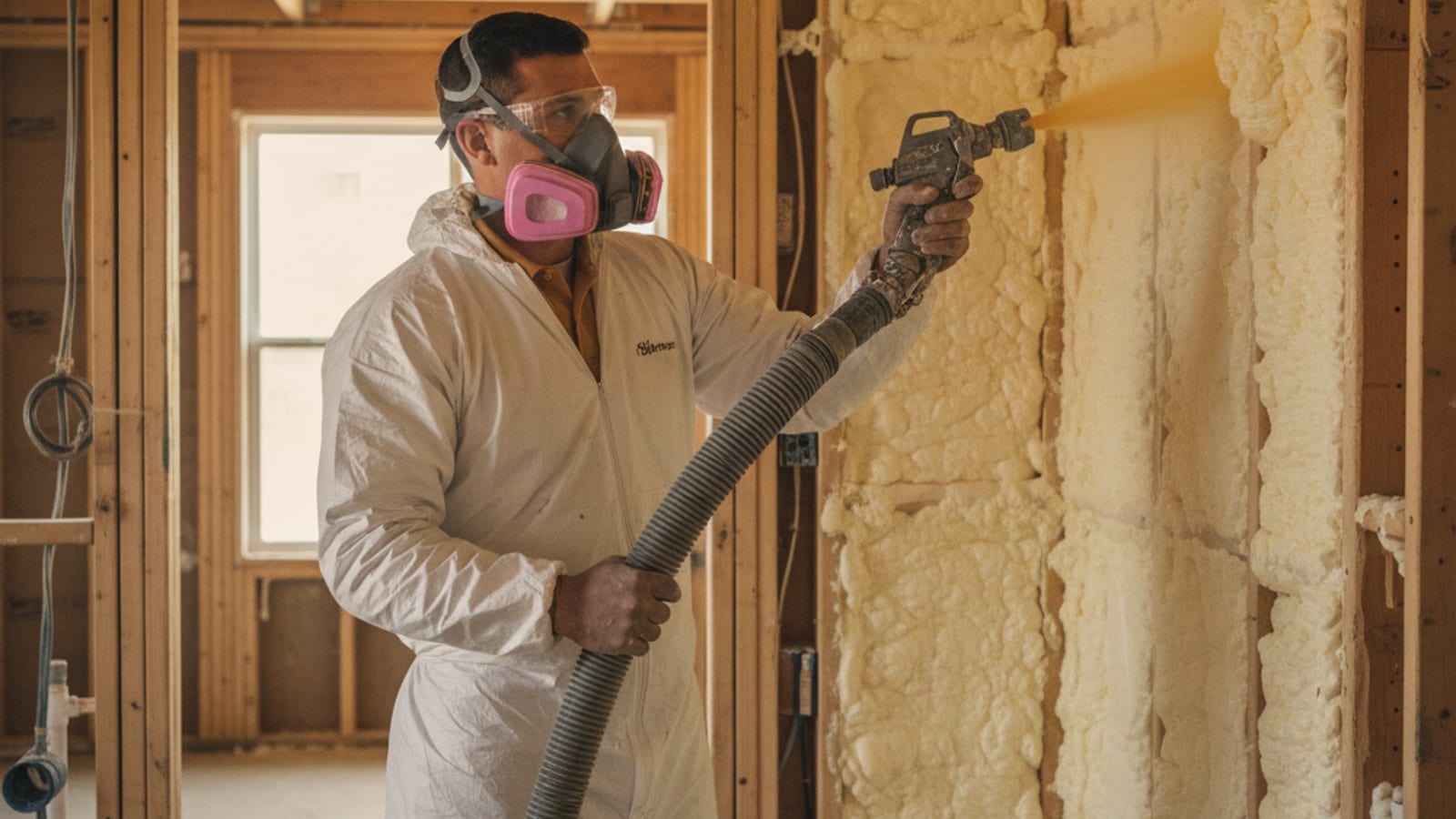
Basics · 7 min watch
Spray foam, explained
Open-cell vs. closed-cell, where each one earns its premium, and where cellulose is the better answer.
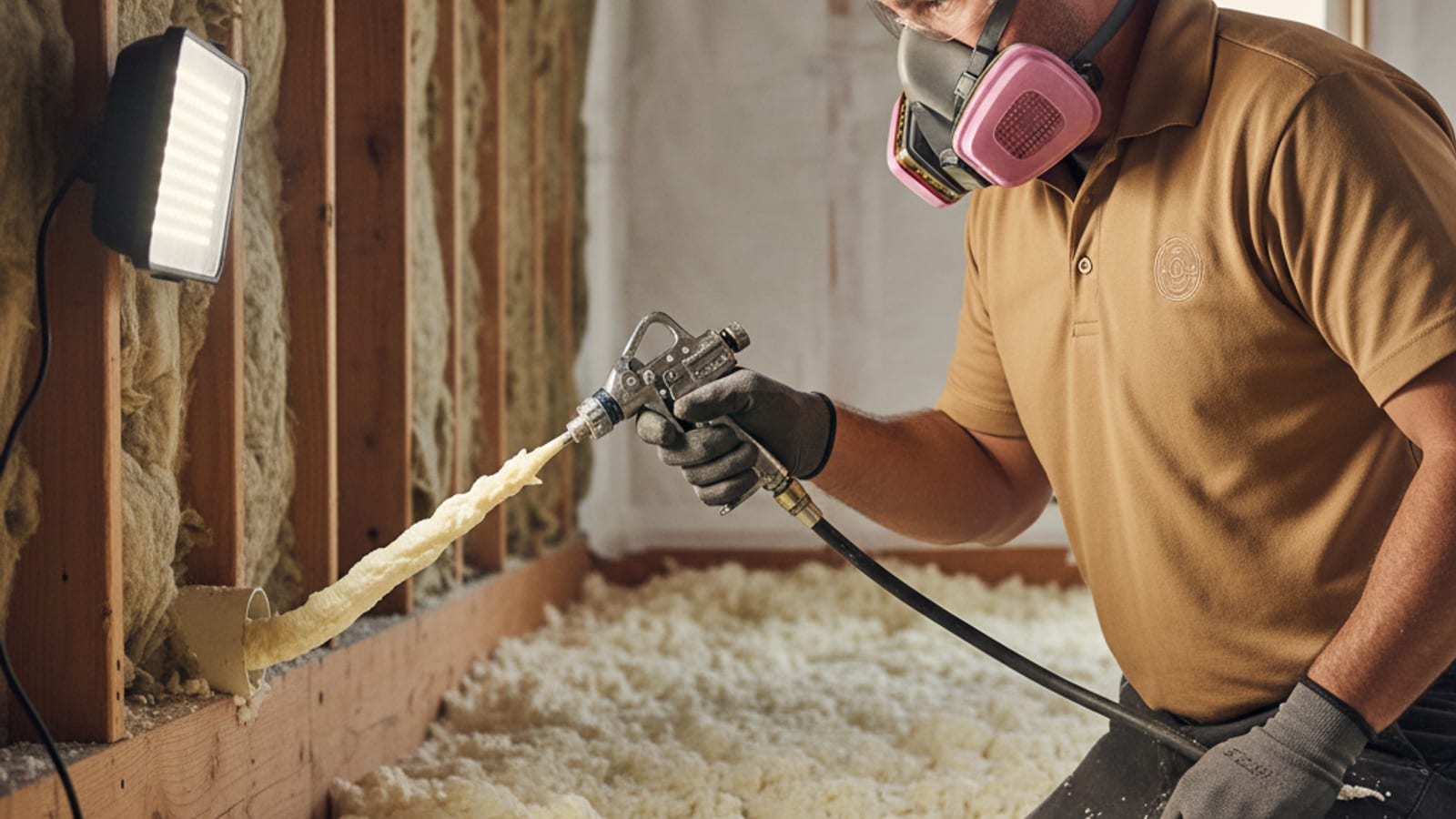
Maintenance · 5 min watch
Air-sealing the house
The high-leverage leaks in a typical San Diego home and what fixing them does.
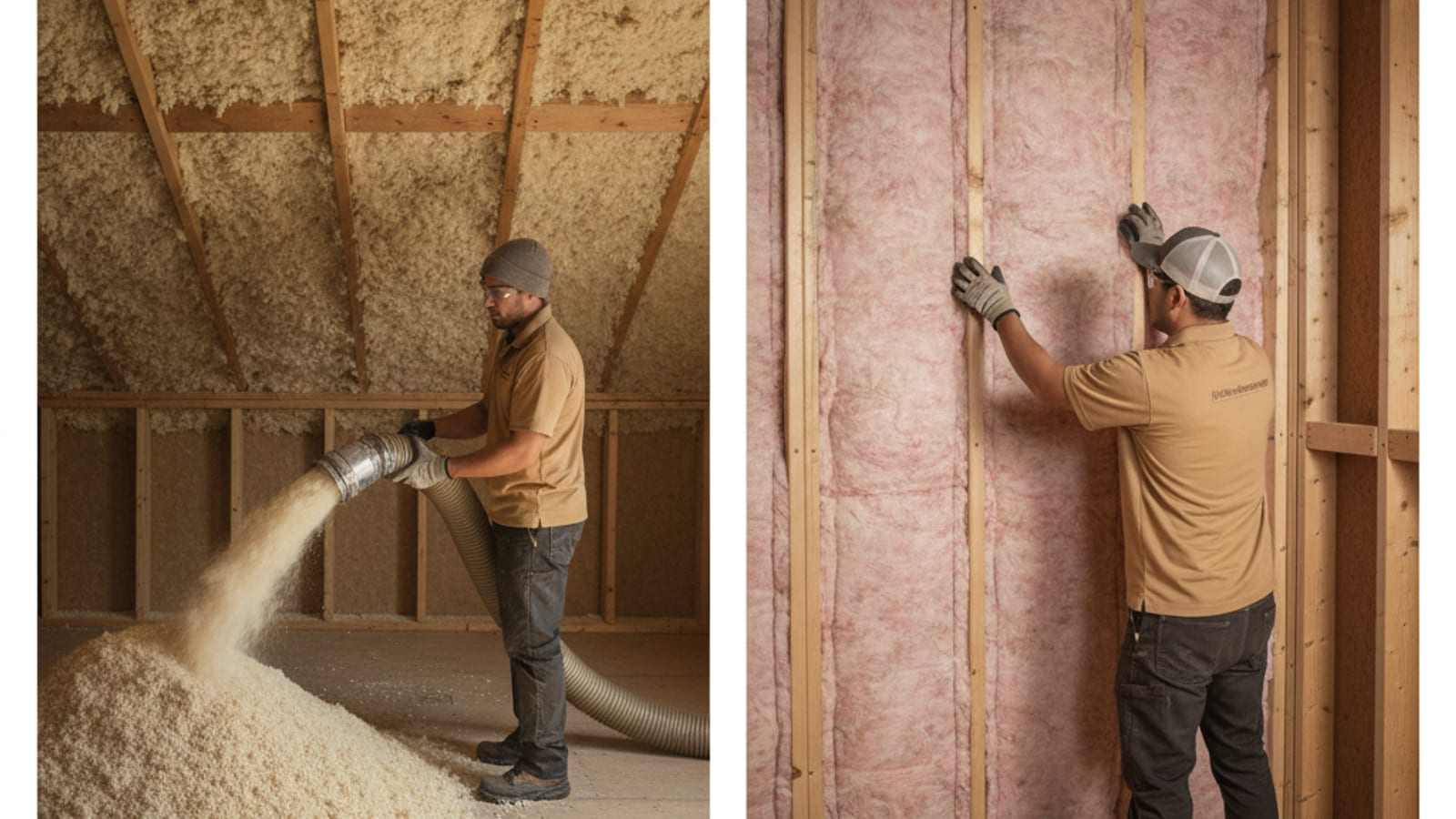
Basics · 4 min watch
Blown-in vs. batts
Both work. They're not interchangeable. Here's how to pick.